
Find Who Owns a Scott County Parcel in Three Records
Scott County splits the owner question across three records. The map finds the parcel. The assessment roll lists the owner of record. The Clerk's recorded land instruments prove the transfer. Start with location, because an address or road name narrows the parcel fast. But a map label is not title. The Commissioner of the Revenue keeps the land book as the assessing official. The Circuit Court Clerk maintains the Tyler deed index. The roll does not always change the day a closing happens. The exact owner field label can vary. The newest recorded deed remains the best confirmation. It proves a recent transfer in Scott County property records.
- Locate the parcel by address, road, or map grid in Scott County InteractiveGIS.
- Ask the Commissioner of Revenue to identify the current land-book owner and assessment entry.
- Search the Tyler land index for the latest deed and compare the grantee and legal description.
- If a company or fiduciary holds title, verify the entity name and capacity from the recorded instrument.
This sequence answers "who owns this property" as a records question. It does not say who lives there. An index entry alone is never a title conclusion.
Scott County Map Labels Are Only the First Owner Clue
InteractiveGIS shines when the starting point is a street, a rural road, or a community name. Accept the public-access terms, open the map, and note the parcel reference shown. Keep the map's own disclaimer in mind. The data are general reference material and may not be timely or complete. Treat any owner label as a clue, not proof.
Take that clue to the Commissioner of the Revenue for land-book information. A Scott County property can still sit under the prior owner's name on the roll after a sale. No standard update delay is published. Compare the newest deed recorded by the Clerk before calling the roll current.
For assessment questions, visit the Scott County Commissioner of Revenue page.
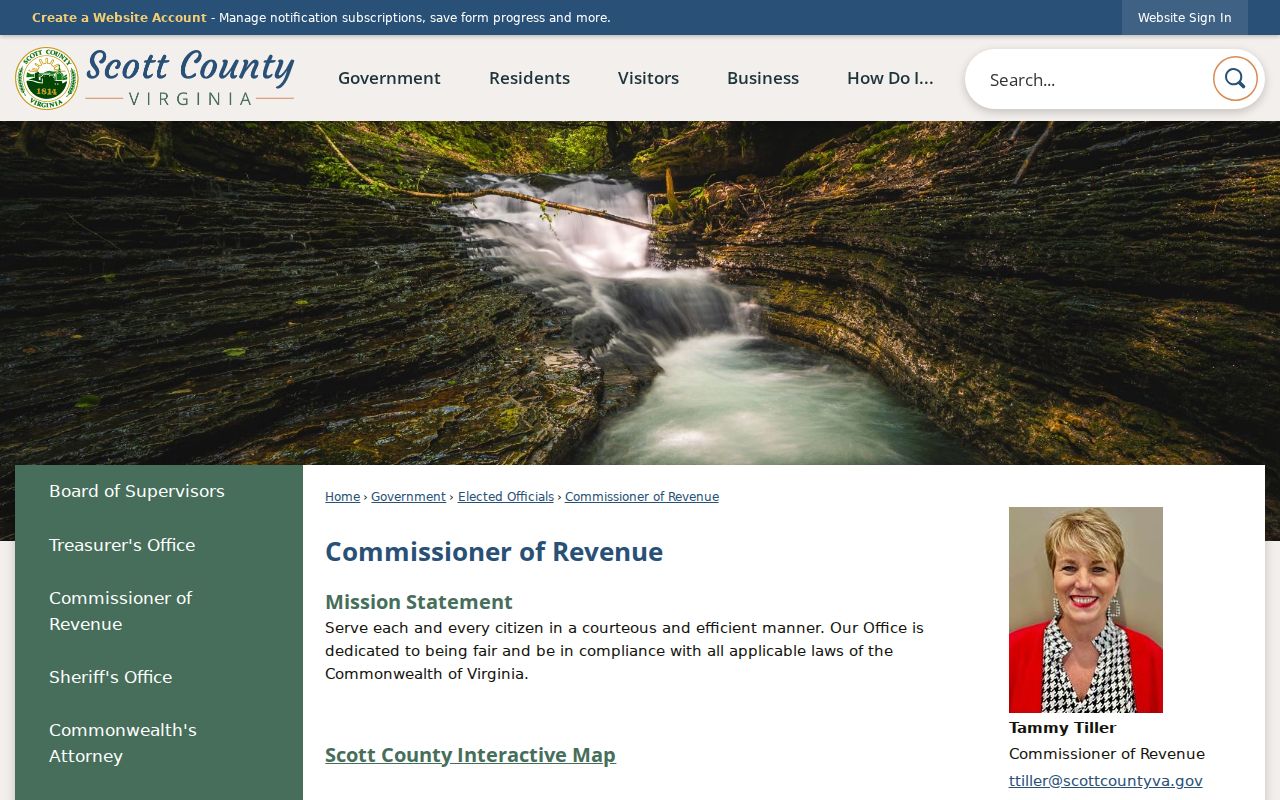
Note: The Commissioner page is the contact route for land-book and assessment questions, not a sample owner card.
Where Scott County Owner Information Is Kept
A Scott County owner lookup works best when you compare sources. You should not trust just one at a time. The Commissioner keeps the assessment information. The Circuit Clerk indexes the land documents. InteractiveGIS maps each parcel, and the Treasurer collects the taxes. Each office has its own job and its own update path. A name can differ from one record to the next on the same day because of that. There is no public sample card and no fixed roll-refresh schedule. The useful question is what each record contributes. It also matters how to reach the office that holds it.
| Source | Owner Info It Gives | Access |
|---|---|---|
| Commissioner of Revenue | Assessment and land-book owner information | County office and InteractiveGIS route |
| Circuit Clerk land index | Recorded grantee and conveyance reference | Tyler index; images have separate access terms |
| InteractiveGIS | Parcel location and map context | Public entry after accepting terms |
| Treasurer | Tax collection and payment account questions | County payment page or office contact |
The owner of record and the occupant are different facts. Tax records may use a mailing address away from the parcel, and an entity or estate can hold title. Deeds and plats supply the legal description that ties the named party to the land.
A Scott County Deed May Name an LLC, Trust, or Estate
The Tyler land index can list a company, trustee, executor, or administrator as the grantee. Read the full vesting language and the authority named in the instrument before treating a name as an individual. For an LLC or corporation, Virginia State Corporation Commission records are the entity source. Use the official state entity search rather than a guessed link. Compare the legal name and status with the recorded deed.
A deceased Scott County owner calls for a different route. Start with the latest deed. Then turn to the Clerk's wills and probate material, including any fiduciary deed, order of sale, or distribution instrument. A will states the intended devise, but the recorded conveyance is the title-chain event that matters.
When a name is unfamiliar, copy the exact punctuation and capacity used in the deed before searching related records. An LLC name can differ from its trade name. A registered agent is a company contact, not automatically the owner. A trustee acts for a trust; an executor or administrator conveys estate land under stated authority. If the grantee seems to share a name with another party, compare the legal description, date, and prior deed. Do not import personal details from unrelated sources. These checks begin with the filed document and the official state entity portal.
For help finding the county record, the Circuit Court Clerk sits at 202 West Jackson Street, Suite 102, Gate City. The Clerk can be reached at 276-386-3801 during weekday office hours of 8 a.m. to 4 p.m. Assessment questions go to the Commissioner of the Revenue at 276-386-7692. Give the road or address plus any known party or deed reference. Then ask which office keeps the record you need.
Scott County's Clerk Alert Can Flag a New Filing
Scott County's Circuit Clerk runs a free email alert. A resident registers a name and gets a message whenever a document is recorded against it. That sounds like transfer protection, but it is not. The notice is name-based rather than parcel-specific, and it blocks nothing. If a filing looks unfamiliar, pull the instrument itself. Confirm the details with the Clerk.
Sign-up and contact information sit on the Scott County Circuit Court Clerk page.
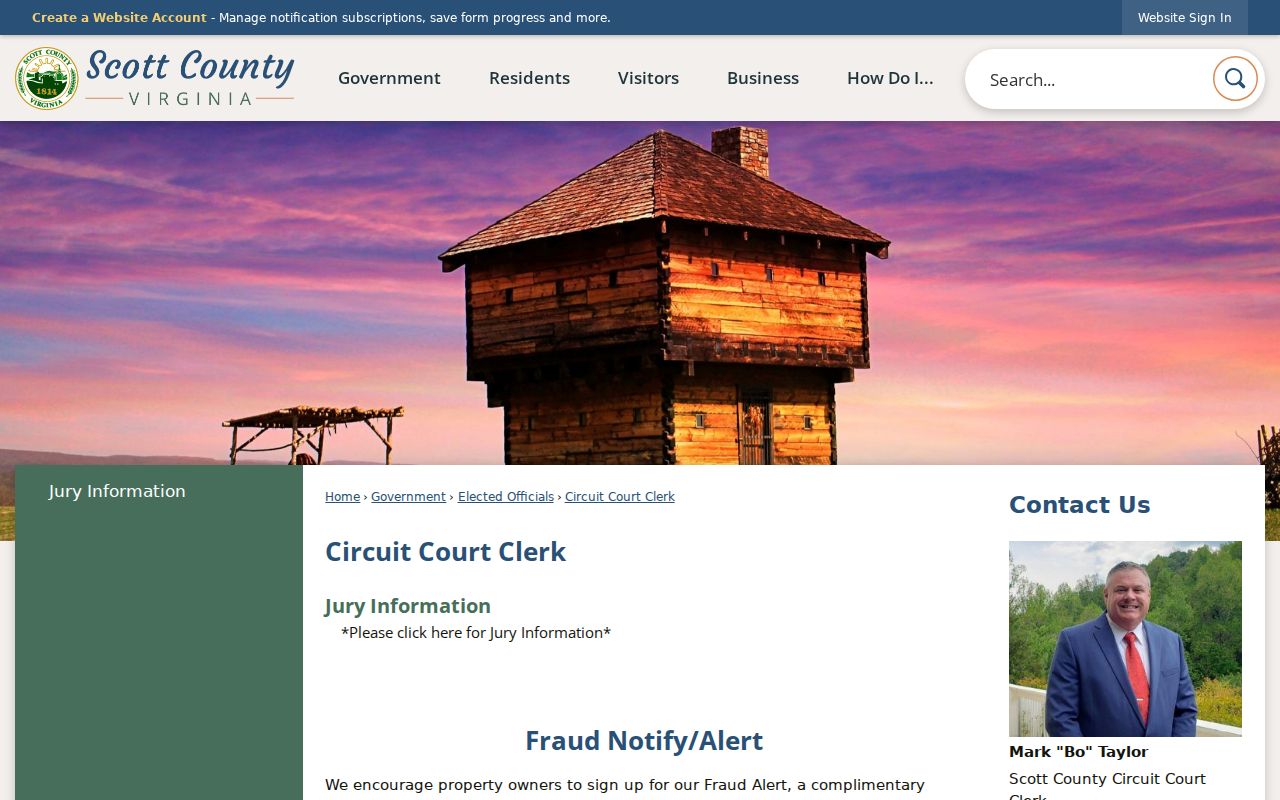
The official Clerk page is the safe place to sign up. It also lists current contact information for the office. A name-based alert helps an owner notice a new recording. It cannot tell you which parcel a filing touches. Match any notice to the index citation, then read the instrument itself.
Ask the Clerk whenever a legal description or a party's capacity seems unclear. This matters most for common names. An LLC, a trust, or a relative can share the same registered name, after all. The alert is one monitoring route. It does not replace finding who the deed names as grantee.
Scott County Mailing Address and Parcel Address Answer Different Questions
A Scott County parcel card carries two addresses that answer different questions. The situs address describes where the land physically sits. The mailing address tells where tax notices go. A mismatch can point to an out-of-county owner, a company, a trust, or a chosen notice address. Neither line proves who lives at the property. Field labels in the public viewer can vary, so ask the Commissioner for the current land-book entry rather than inferring a resident from a mailing line.
Need to reach an owner about a boundary issue? Use the proper county record route. Keep the communication tied to the property matter itself.
Confirm the Scott County Grantee Against the Deed
An index entry names the latest grantee, but the deed itself settles the question. Read the instrument before trusting the index line. Confirm the parties, the date, the legal description, and any parcel or plat reference. Older deeds often describe a larger tract. The land may have been split later. Use the newer plat or conveyance to connect the portion to the present map. A Tyler search identifies a document. Understanding what was conveyed takes reading the image.
The Clerk's self-service setup lets users identify a document. From there they can buy a copy and request a certified copy without visiting the office. Its image subscription is separate from index use. Compare current fees and the counter route before ordering. Start a live deed-index search at the Scott County Tyler self-service portal.
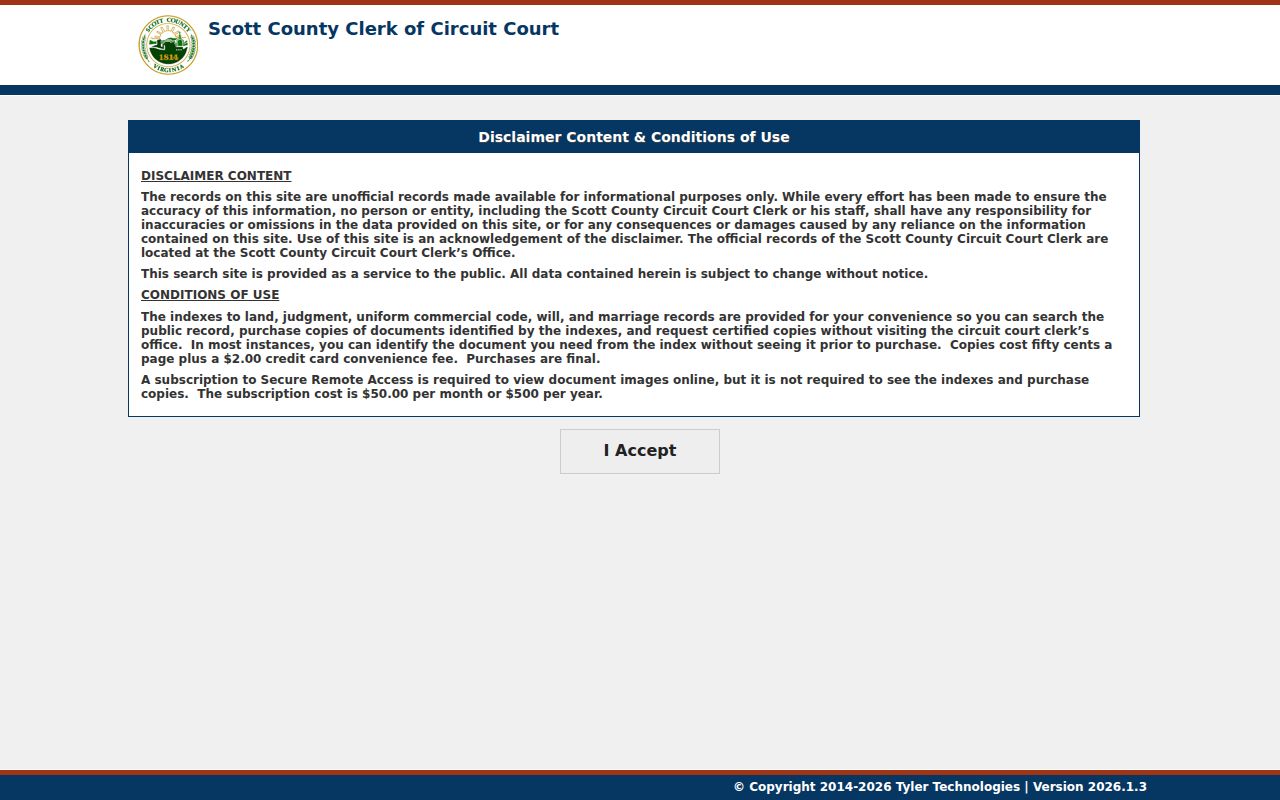
The index view is only a starting point; the signed and recorded instrument is the document to review.
What a Scott County Owner Lookup Leaves Open
In Scott County records, the named owner or grantee answers the ownership question. No record verifies occupants. A parcel map is not a title search. The assessment roll may lag behind the date a deed is recorded. Public property information does not unlock every sensitive detail either. Confirm the record with the custodian. Keep the inquiry tied to ownership, boundaries, or another lawful property purpose.
Lawful use. Scott County owner records support property research, boundary questions, and civic review. Do not use a name or mailing address to stalk, intimidate, or harm anyone.