
Three Meanings of Scott County Property Value
Any Scott County property value lookup should keep three figures separate. The Commissioner of the Revenue sets the assessed value for taxation. A market value is only an estimate of a likely sale price under stated conditions. The county publishes no separate parcel-level market appraisal field. The deed records the transfer itself, along with the legal description. Its sale-price field and the way consideration displays must be confirmed in a live record. Rely on neither one until then.
| Value | What It Is | Where |
|---|---|---|
| Assessed value | County assessment used under Virginia's fair-market assessment standard | Commissioner of Revenue |
| Market value | Sale-oriented estimate; no separate public Scott card was captured | Independent appraisal or verified market analysis |
| Sale consideration | Price or consideration tied to a recorded conveyance; exact Tyler display unverified | Circuit Clerk deed or instrument |
| Land and improvements | Potential card fields; split was not visible in a sample result | Confirm with Commissioner of Revenue |
Virginia Code section 58.1-3201 sets general and annual real-estate assessments at 100 percent of fair market value. That is a level of assessment. It is not a promise of a match. A sale price, tax bill, or appraisal may differ from the county figure. No sample parcel value card or deed consideration field appears on the public pages. So check the live record before comparing numbers. Start any comparison with parcels that share location, acreage, improvements, access, and boundary history. State the assessment year for each value. A recorded sale is a dated transaction tied to the deed's legal description. It may not cover the same area. A later tax map can show different lines after a split or combination. An independent appraisal answers a different market question and should state its effective date and assumptions. No Scott County-only town series exists for Gate City, Weber City, or Nickelsville. So a countywide trend cannot stand in for a town-specific result.
Scott County's Assessment Level Is Not Its Levy Rate
The statutory 100-percent level has a narrow meaning. It tells the Commissioner how general real-estate assessments relate to fair market value. It is not the county's tax rate. Nor does it mean the tax bill equals the assessed number. A separate process applies the local levy. Authorized relief or exemptions can change the amount due. This page concerns what the value means. Questions about a bill or appeal belong with the county offices that administer those records. When you compare a Scott County property value with a recorded sale, note the tax year. Note the assessment year, and the deed date. Check that the figures describe the same parcel boundaries too. A split or combined tract can make otherwise similar numbers look inconsistent. Verify assessment contacts and forms with the Scott County Commissioner of Revenue.
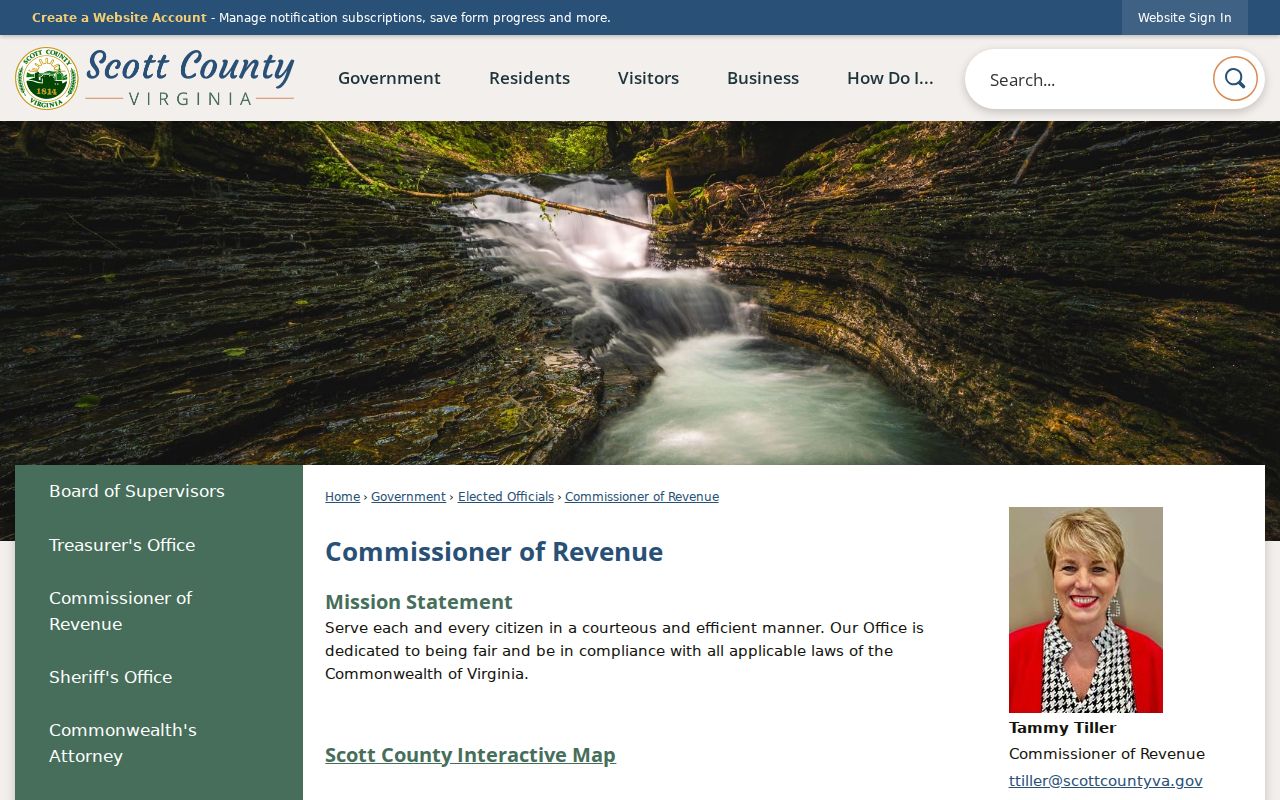
The county page names the assessing office and its role. It offers no sample parcel-value display.
Scott County Reassessment Activity Does Not Set a Value Date by Itself
Virginia's general reassessment statute sets a four-year cycle. Boards may vote for a three-year cycle instead. Counties with 50,000 or fewer residents can choose five or six years. Scott County meeting material from 2024 weighed the tradeoffs between four and six years. A 2026 county bid listed General Reassessment Services with a September 4, 2026 close date. Neither item alone establishes the adopted interval, an effective year. It also does not set a new value for any parcel. Ask the Commissioner which Scott County assessment roll applies. Ask whether a current reassessment has taken effect. Procurement timing is not proof that the number on a specific parcel has changed.
Recorded Sale Consideration Is a Different Scott County Number
A deed records a conveyance and a legal description. It may contain or refer to sale consideration. No sample Scott County deed result can show how a sale-price field appears in Tyler or whether an online parcel card displays the value, so use the land index to identify the instrument, then inspect the recorded image or request a copy from the Clerk. Match the deed's tract to the parcel being valued before you compare the consideration. A sale price can carry terms or circumstances that make it a poor measure for another property. The assessed value, the deed consideration, and an independent appraisal each serve a separate purpose.
Scott County Use-Value Records May Preserve Two Land Figures
Virginia Code section 58.1-3236 describes land-book records showing both use value and fair-market value. That applies where a locality has adopted qualifying land-use taxation for agricultural, horticultural, forest, or open-space property. The Scott County Commissioner page lists tax-relief forms. But no local use-value application or ordinance appears there. Do not assume every farm parcel gets special value treatment. Ask the Commissioner which program and records apply.
If two land figures appear in an official record, identify which is the use-value treatment. Also note which is the fair-market value, along with the year. The county publishes no parcel card sample, so confirm the actual field labels.
How to Look Up a Scott County Value of Record
The Commissioner of Revenue serves as Scott County's assessment source. Its public page connects to InteractiveGIS. That map helps you pinpoint the right parcel. The county road grid helps too. Confirm your choice before you call. The office can then confirm the current assessment figure and the year it covers. Keep a separate deed reference for the last transfer. Value of record questions often lead back to it.
- Locate the parcel in the county map or by the road-map grid if a rural address does not resolve.
- Contact the Commissioner to confirm the current land-book assessment and the year it applies.
- Find the latest deed in the Clerk's index if the question involves recorded sale consideration.
- Use a qualified appraisal for a sale or financing decision that requires an independent market opinion.
- Assessed value
- The value established for Scott County real-estate taxation.
- Market value
- An estimate of likely exchange value, not a guaranteed sale amount.
- Level of assessment
- The statutory relation between an assessment and fair market value.
- Consideration
- Value tied to a recorded transfer; inspect the actual deed.
Property-value questions stop at interpreting the numbers. Scott County's payment and appeal procedures stay with the Commissioner and the Treasurer.
Scott County Does Not Publish a Captured Parcel-Value Sample
Scott County publishes no official sample card for values. Owner of record, land value, improvement value, total assessment, tax district, deed reference, and last sale consideration do not appear together in one place. Those are still useful fields to verify. Just do not presume they appear together online. Ask the Commissioner for the literal field labels. Ask also for the update date that applies to your parcel. Record the source, the year, and the parcel boundary behind each figure. A valuation comparison gains strength from that.
Cite any Scott County property value as an assessed value or a recorded sale figure. Calling it a current appraisal is wrong unless an appraiser actually produced one.
When you request a value of record, identify the parcel by road or address. Keep the tax year, source office, and parcel boundary with the number you receive. Land, improvement, tax-district, and last-sale fields may not sit side by side in one online record. So do not promise that they do. A figure may matter for a purchase, an estate, or financing. Compare like parcels and dates first. Then ask a qualified appraiser for a private valuation. County assessment data serves taxation well. But it cannot replace a market opinion or a title review of the land you are comparing.
What a Scott County Assessed Value Does Not Tell You
An assessed value will not tell a buyer what a property sells for today. It does not guarantee any future price either. It also skips features a private appraiser would weigh. And a Scott County reassessment may carry a different effective date than a recent sale. Use the number for its stated assessment purpose. Then seek an independent market opinion whenever a transaction demands one.
Value vs price. Scott County's assessed value supports taxation; it is not a listing price or appraisal. A sale decision may require an independent appraisal by a qualified professional.