
What Scott County Property Tax Records Can Separate
A few distinct pieces make up Scott County property tax records. The Commissioner of Revenue keeps the assessment record and administers relief forms. The Treasurer collects real-estate and personal-property taxes and tracks collection status. The local levy sits on top of the assessment. No sample bill or live account-search form appears on the county's public pages, so the exact fields shown online should be confirmed with the office that holds the record.
| Field | What It Shows | Where |
|---|---|---|
| Real-estate assessment | Value established for the county land book | Commissioner of Revenue |
| Assessment level | Virginia's general 100% fair-market-value standard | Virginia Code and assessing office |
| Tax relief forms | Disabled Veterans Tax Relief and Elderly Tax Relief Application are listed | Commissioner of Revenue |
| Bill and payment | Account balance and payment details require Treasurer confirmation | Scott County Treasurer |
| Levy and total due | Assessment times local rate, adjusted by authorized relief and charges | County tax process; exact bill fields unverified |
Virginia's 100-percent assessment rule describes the level of assessment, not the size of a bill. A bill reflects the local rate, any relief, and other authorized charges. A sale price is a different fact entirely. It lives in the deed, not the tax roll. An assessment is also not an appraisal. It does not predict what a buyer will pay for the property.
The Scott County Commissioner Assesses; the Treasurer Collects
The Commissioner of the Revenue is Scott County's chief tax-assessing official. The office handles real-estate and personal-property tax, determines taxability, and posts assessment and relief forms. The Board of Supervisors sets policy and rates. The Treasurer collects the revenue. The Treasurer also publishes payment links for both real estate and personal property. This division gives every owner a clear first call. Value or classification questions go to the Commissioner. Balance, receipt, and payment questions go to the Treasurer.
The Commissioner page offers no public tax bill search field. The Treasurer's payment link redirects to an outside processor. Whether that processor searches by parcel, owner, account, or tax year is not stated on the county site. Confirm its current workflow with the Treasurer before treating it as a complete payment history.
For assessment questions and relief paperwork, contact the Scott County Commissioner of Revenue.
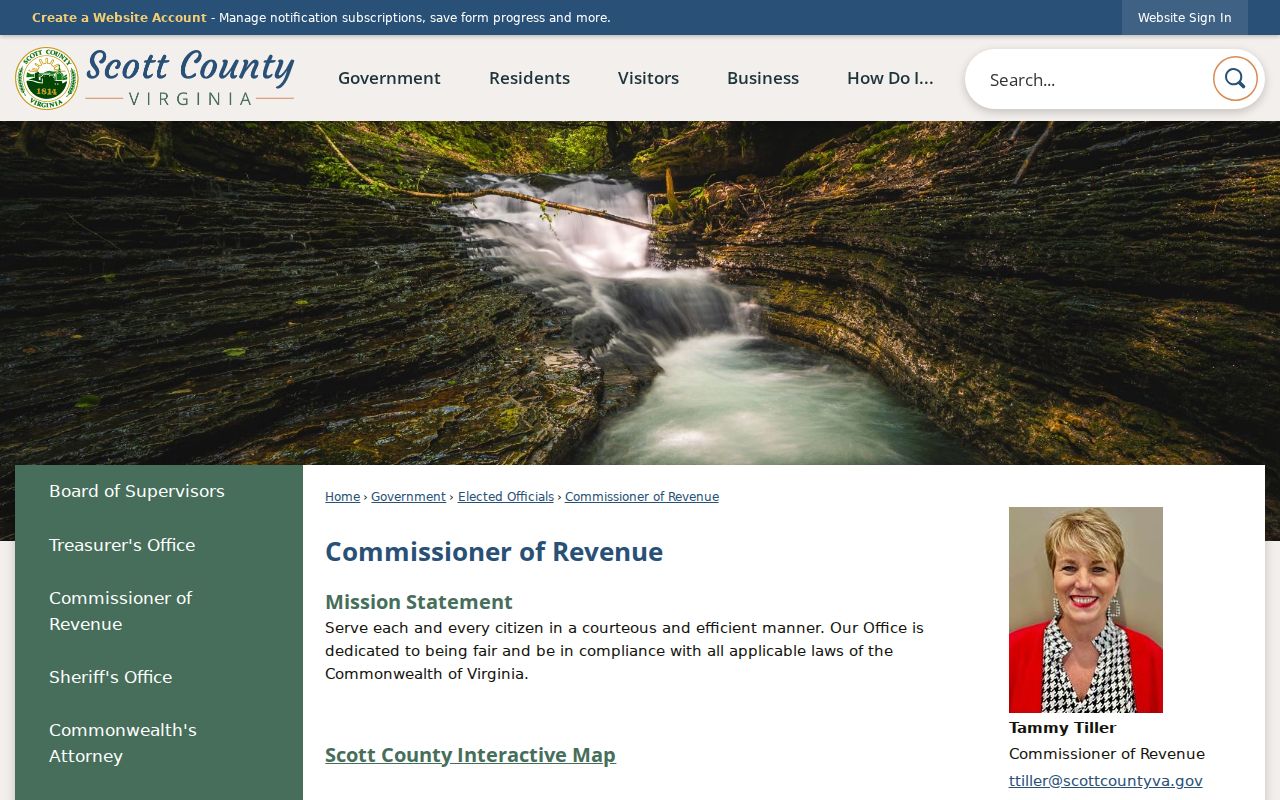
For verifying assessment contacts and relief paperwork, the Commissioner page is the authoritative source rather than a third-party parcel estimate.
Scott County Tax Payment Details Belong With the Treasurer
Scott County's Treasurer page publishes payment links for real-estate and personal-property taxes. Kevin Helms serves as Treasurer, reachable at 276-386-7742 and khelms@scottcountyva.gov. The county's indexed page does not say whether the payment processor offers a public balance search. It is also silent on tax-year history, delinquency status, installments, and receipts. Call the office before you rely on any of those details. Ask what parcel or account details to have ready.
Collection and assessment are different jobs. A payment page cannot explain why the Commissioner assigned a value. An assessment correction will not prove an account was paid.
For balances and payment instructions, use the Scott County Treasurer's Office page.
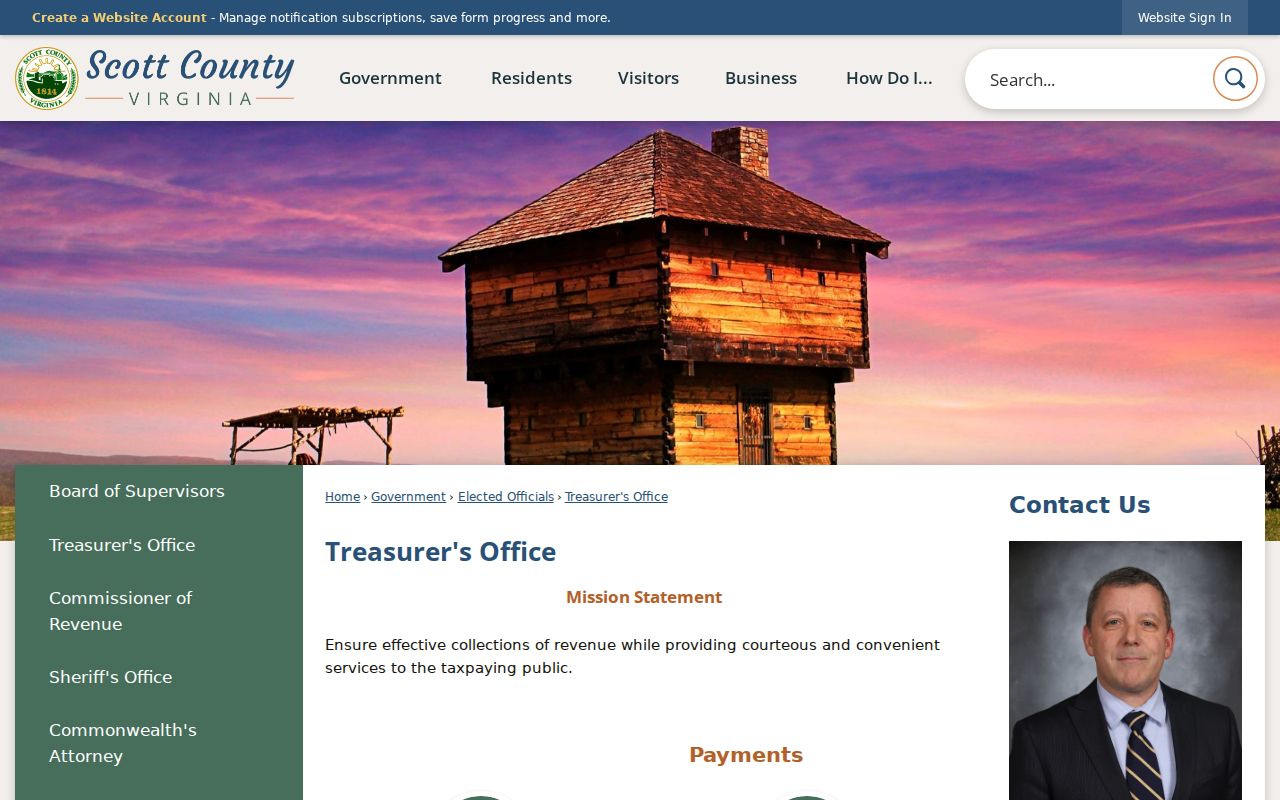
The county page points the way to pay, but balance and processor details should be confirmed with the Treasurer before sending money.
Scott County Has No Verified Public Delinquent-Tax Search
The county publishes a Treasurer payment link. It posts no public form showing a delinquent real-estate list, tax-sale schedule, redemption status, or parcel-level bill history. An online payment button is not a promise of arrears data. It is also no promise of a full tax account. Ask the Treasurer directly whether a specific tax year, parcel list, advertised sale, or receipt exists. Ask also through which channel it is available.
When an older bill or list is not online, Virginia FOIA allows a reasonably specific request. Name the tax year and record type. Request a cost estimate if the search will be broad. The public body generally has five working days to provide the record or a written response. When more time is needed, it must explain the delay. It then receives an additional seven work days for its statutory response.
How to Ask About a Scott County Tax Bill
The county's payment link is the online starting point. Its public page does not state the search fields, so have the parcel address, owner name, tax year, and any account or map reference ready before contacting the Treasurer. If the question is really about the value behind the bill, request assessment information from the Commissioner instead of treating a payment result as a valuation record.
- Open the Treasurer page and follow its current real-estate payment link.
- If the processor does not locate the parcel, call the Treasurer with the address and tax year.
- Ask the Commissioner whether a relief form or land-book assessment record applies.
- Request separate confirmation for any delinquency, lien, or sale notice because no public list was verified.
- Assessed value
- The value the Commissioner establishes for taxation under Virginia's assessment standard.
- Local levy
- The rate set through the county process and applied to the assessment.
- Relief or exemption
- A reduction or treatment authorized by applicable law and local administration; check the listed forms.
- Tax lien
- A legal claim tied to unpaid tax; confirm the actual filing and status with the custodian.
Scott County's taxpayer sequence ends with the Treasurer's account record, while assessment or classification questions loop back to the Commissioner of the Revenue.
For a bill review, keep the notice period and tax year attached to the question. A current assessed value and an earlier payment balance are different records. Ask the Treasurer to confirm any posted payment or remaining balance. Contact the Commissioner when the assessment basis or property description appears wrong. The county publishes no online account-history field list or public delinquency search, so treat a processor result as a payment route rather than the complete county tax file.
Virginia's 100 Percent Rule Is Not Scott County's Tax Rate
That 100 percent figure in Virginia Code section 58.1-3201 trips up a lot of people. It sets the assessment standard. In other words, Scott County must appraise real estate at full fair market value. It does not mean the county takes the whole value as tax. The local levy applies to that assessed amount. Relief, exemptions, or added charges can move the final figure either way. Multiplying a sale estimate by 100 percent is a fast way to a number that resembles no tax bill you will ever receive.
Scott County's land-book assessment and the Treasurer's bill answer two different questions. They only look alike. Keep the tax year and any relief line attached to each record. Without that, figures from separate years get compared as though they were current at the same moment.
Scott County Lists Specific Tax-Relief Forms
The Commissioner of Revenue page posts specific relief forms for Scott County. A Disabled Veterans Tax Relief form is there. So is an Elderly Tax Relief Application. Business and personal-property forms sit alongside them. The county publishes no full statement of local eligibility rules or per-form deadlines. So bring the form to the office. Ask which documents and filing dates apply to your parcel or situation.
Other forms on the same page include a Real Estate Address Change Request. There is also a Personal Property Address Change Request. Exemption certificates appear there too. An address change only reroutes the mail. It does not revise the deed or settle who owns the property. Assessment corrections and tax payments each run on their own county track. Mixing them slows both down.
For an amount due, contact the Treasurer with the notice or account number in hand. Ask about the payment balance, collection status, and accepted payment methods. The county links to a payment processor but publishes no complete online delinquent-tax lookup. So a blank result there proves nothing about whether tax is owed. For the value behind a bill, go to the Commissioner instead. Name the assessment year. Keeping the two questions apart helps each office pull the right record.
Scott County's Current Reassessment Interval Needs Confirmation
Virginia law sets a default reassessment cycle of four years. A board vote can shorten it to three. Counties of 50,000 or fewer residents may stretch to five or six. Scott County meeting material from 2024 weighed four-year against six-year options. That discussion, though, is not an adopted cycle. The county's 2026 bid page lists a General Reassessment Services procurement closing September 4, 2026. A bid, though, names neither the effective assessment year nor the contractor who wins it.
Before using Scott County property tax records to compare a value across time, ask the Commissioner which roll year is in force. Also ask whether any reassessment has taken effect. Procurement activity alone is not a date you can count on.
How to Challenge a Scott County Assessment
Virginia appeal law lets an owner challenge an assessment on several grounds. Overvaluation leads the list. Other grounds also qualify. These include nonuniform treatment, acreage errors, and equalization issues. Relief runs through the local process and, where allowed, circuit court. Before a Board of Equalization, the assessment stands as presumed correct. The burden falls on the property owner to bring substantial evidence. A tight file might hold several items. These include a corrected acreage source, comparable assessments showing nonuniformity, the legal description, recent recorded transfer material, and a plain explanation of the valuation error.
Scott County publishes no current annual notice in one place. The same goes for the Board of Equalization calendar, application form, or filing deadline. Contact the Commissioner promptly after a notice arrives. Confirm the current procedure in writing. And never back into an appeal window by counting from a generic four-year cycle.
Appeal window. Scott County's current local deadline and hearing dates were not verified. Ask the Commissioner for the active filing instructions and preserve the notice, parcel identifiers, and supporting evidence.