
What Scott County Deed Records Place on the Record
Scott County's Circuit Court Clerk records land instruments and offers a self-service index through Tyler. The exact instrument-type dropdown stays hidden online. Each document plays its own role in a parcel review. A deed transfers title. A deed of trust secures debt. Start with the latest conveyance, then use related instruments to trace releases, security interests, and the shape of a lot.
| Deed Type | What It Does | Common Use |
|---|---|---|
| Conveyance deed | Names grantor, grantee, and the transferred land | Read legal description and recording reference |
| Deed of trust or mortgage | Secures an obligation against property | Check for later release or satisfaction |
| Assignment or release | May change or discharge an earlier security instrument | Match parties and original reference |
| Recorded plat | Shows surveyed lot, access, and subdivision context | Compare the caption and lot with the deed |
| Fiduciary conveyance | May transfer land from an estate or trust | Confirm authority in the probate or court record |
A deed conveys whatever interest its terms state. A deed of trust works differently. It secures a debt rather than transferring ownership. The Tyler index families extend past land records. The wider index covers UCC filings, wills, and marriages alongside land and judgment entries, and a judgment entry alone never changes title to the parcel.
Scott County's Five Tyler Index Families
Tyler organizes Scott County records into five index families: land, judgment, UCC, will, and marriage. For deed work, pick land records first. Follow the grantor and grantee names through the recorded instruments. A judgment search can surface a recorded lien. A will may point to an estate route. Neither substitutes for the recorded deed that actually conveys the land. UCC filings often cover business or personal-property collateral, so they are not automatically real-estate liens.
The county's disclaimer lists no dropdown values. Check the live form for its actual search controls.
Start at the Scott County Tyler land-record search entry for a live index query.
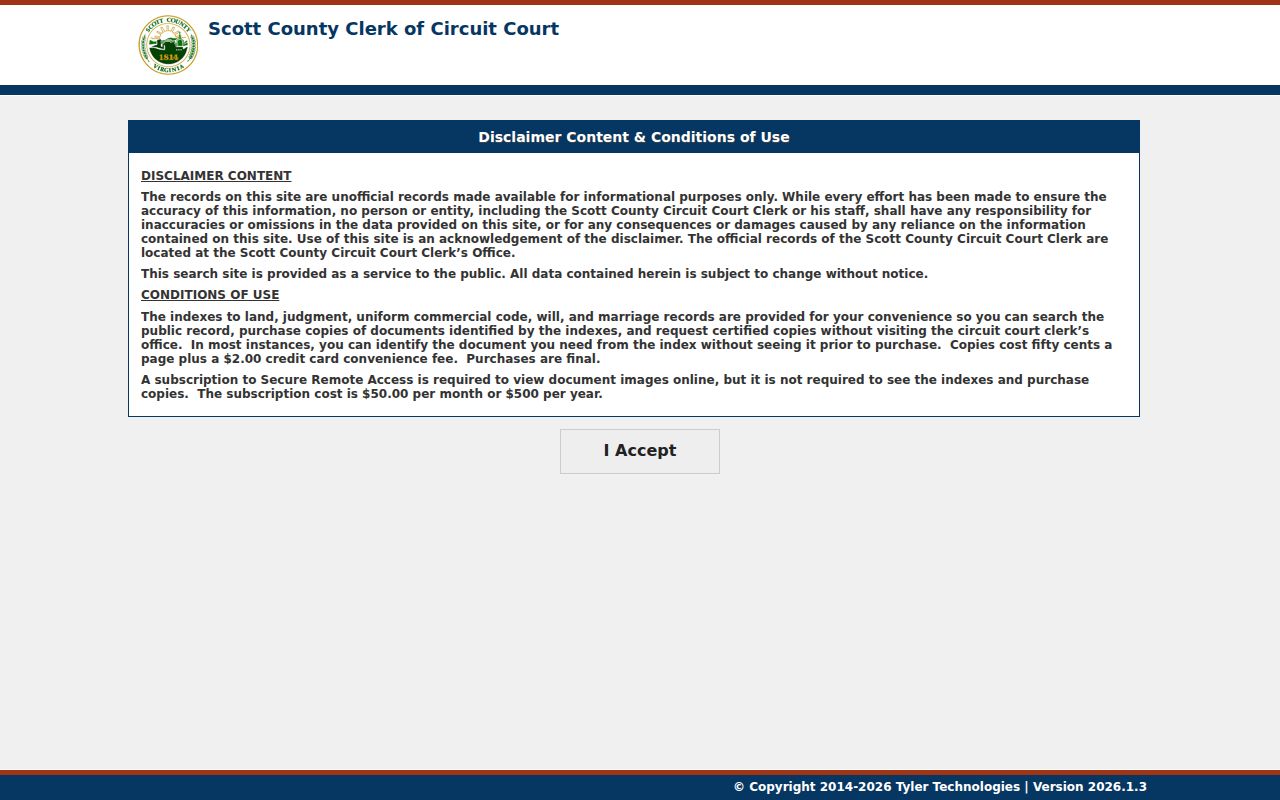
The entry screen opens the county index. It offers a way in, not a sample deed result or a complete field list.
Search-Field Details Still Need a Live Tyler Check
The live form's field labels are not documented. Whether it says grantor and grantee is unclear. So are its date filters and whether book/page and instrument number sit in separate boxes. That gap matters for older paper references. It also matters when an owner's name has several spelling variants. Use the form's literal labels, and ask the Clerk when a known reference returns nothing.
| Tyler element | Published evidence | Build-safe search practice |
|---|---|---|
| Record category | Land, judgment, UCC, will, marriage | Choose land for conveyances and plats |
| Party name | Not rendered in the disclaimer | Test grantor and grantee separately if offered |
| Document number | Not documented publicly | Keep the original instrument reference nearby |
| Book/page or plat | Exact search controls unknown | Use the recorded citation in a clerk request |
| Date range | Earliest online year not published | Do not imply an online cutoff year |
Scott County Index Search and Image Retrieval Are Separate
Scott County lets you identify a document through Tyler. You can buy a copy without visiting the office. Viewing images online is different. That requires a Virginia Secure Remote Access subscription. Copies run $0.50 per page, plus a $2 card convenience fee. All sales are final. The listed SRA subscription runs $50 per month or $500 per year. Confirm current charges before checkout. Also check which agreement fits a land-record-only account or officer-of-court access.
Virginia's statewide portal explains the rules. Index access may be free where the clerk allows it. Image access depends on clerk authorization, a signed agreement, and payment. One instrument rarely justifies a yearly subscription.
Check current terms at the Virginia Secure Remote Access portal before requesting remote deed images.
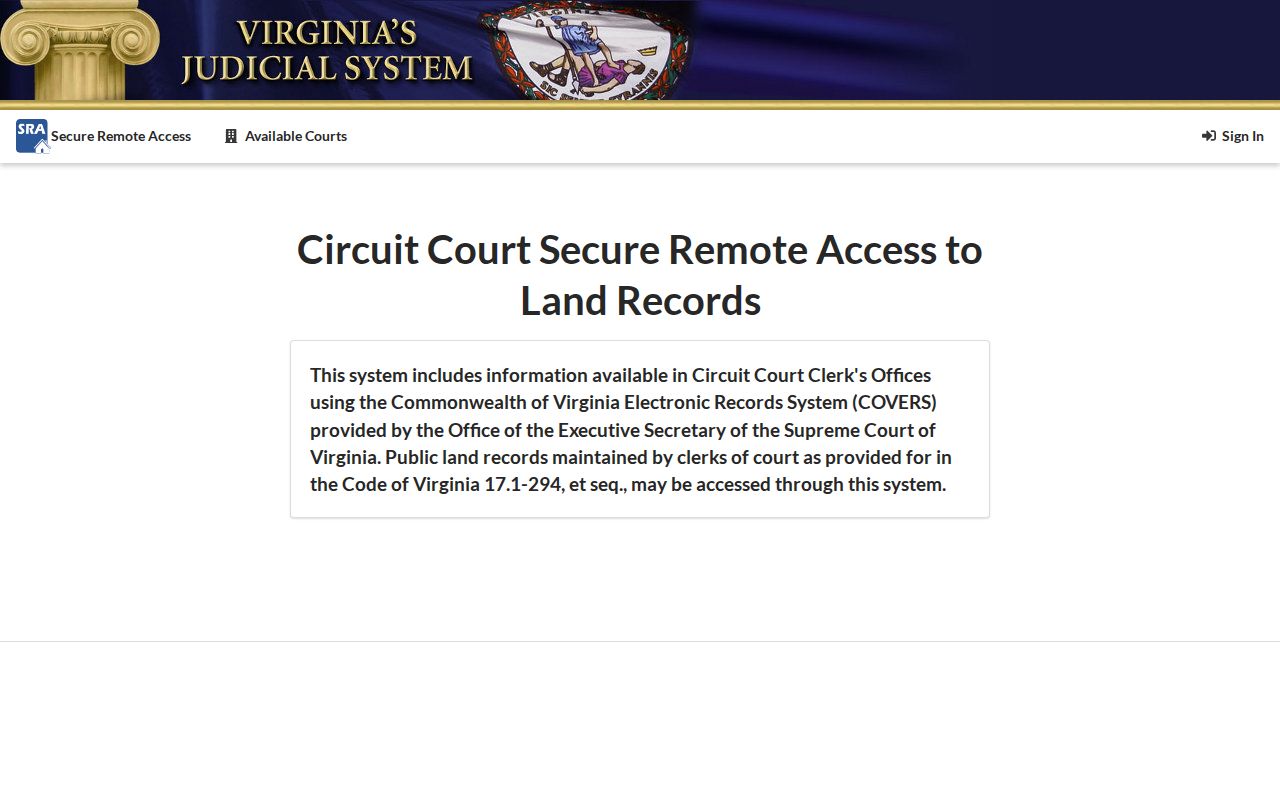
Statewide rules frame image access; Scott County sets prices.
Follow a Scott County Grantor and Grantee Through the Index
A grantor gives an interest. A grantee receives it. Start with the most recent deed naming the parcel, and note the parties, the date, and the legal description. To go backward, search that grantor as a grantee in an earlier deed. Then confirm the earlier document describes the same tract. This chain can reveal successive recorded transfers. The county publishes no online start year, so ask the Clerk or check the live system for the earliest records.
- Find the current vesting instrument in the land index and read its full parcel description.
- Record each grantor, grantee, execution or recording date, and instrument reference.
- Search the prior grantor as grantee and check that the next deed covers the same tract.
- When the online trail ends, use deed books, microfilm, plats, and archive holdings instead of guessing at a cutoff.
- Grantor
- The party who conveys the stated interest.
- Grantee
- The party who receives the stated interest.
- Chain of title
- The ordered set of recorded instruments linking prior transfers.
- Book/page or instrument reference
- The Clerk's citation used to locate the actual document; confirm the format shown in Tyler.
A formal title review also demands releases, judgments, probate instruments, easements, and plats. Deed names alone settle nothing.
Scott County's Earliest Deed Books Are Available Through Finding Aids
The Library of Virginia's finding aid covers Scott County Deed Books 1 through 3. It spans 1815 to 1829. It also catalogs minute books from 1815 to 1835. Will Books 1 through 4 are dated 1816 to 1860. Treat these as coverage leads. Ask the repository before a visit about originals, microfilm, and reproduction options.
Scott County's first court convened in 1815, a year after the county formed. A transfer recorded earlier may sit in Washington, Lee, or Russell County deed records instead. Those were the parent jurisdictions. The Library of Virginia's locality guide helps sort out where each holding lives.
Consult the Library of Virginia locality and holdings guide for the archival lead shown here.
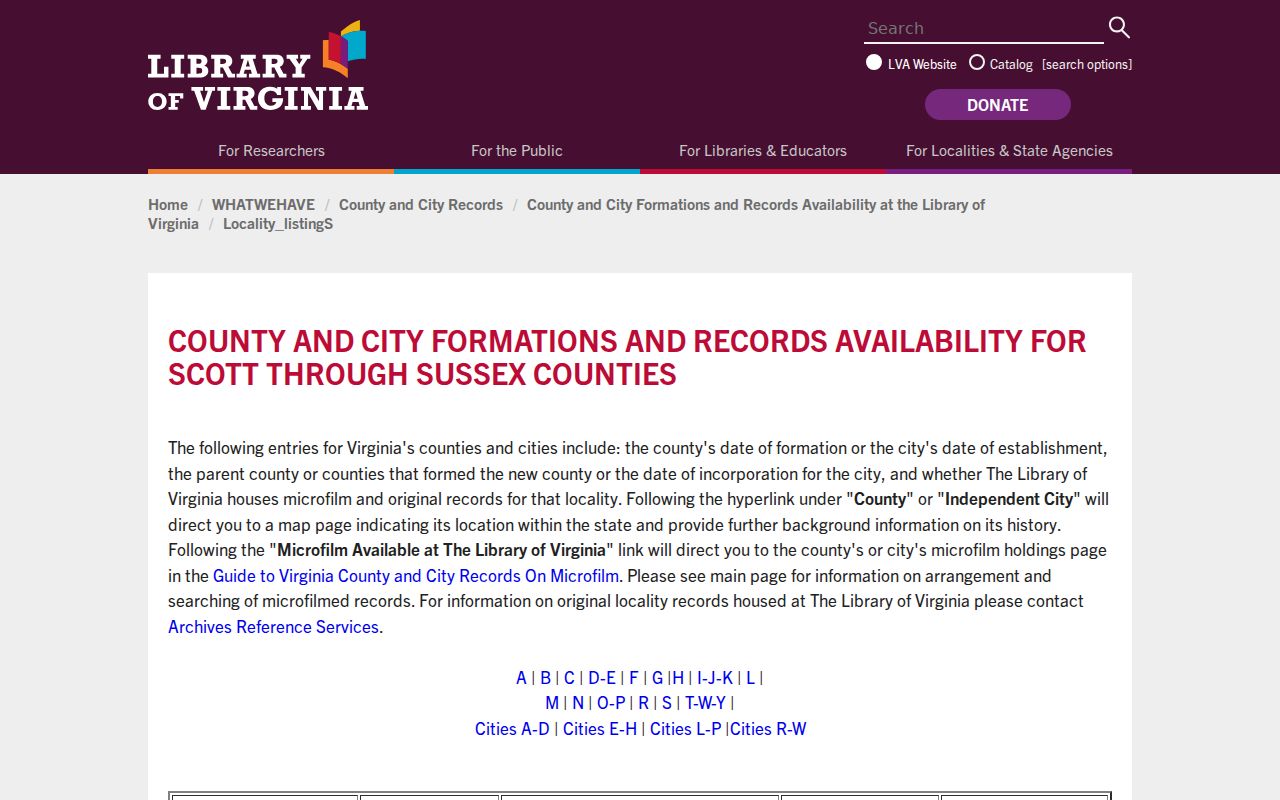
Pin down a likely volume and year in the finding aid first. Then confirm access and the exact citation with the archive or the Clerk before you rely on it.
Scott County Chancery Files Can Explain a Transfer
Partition, estate, debt, and boundary cases can tie together names that vanish from the deed chain. A chancery file may hold a court order, a land division, or a sale. It may also name a tract. That clue can send you back to the deed index. In 2013 the Library of Virginia announced that historic Scott County chancery causes had been digitized. Digitization is a major aid for older ownership questions. Still, a digitized cause is no substitute for the recorded instrument.
Scott County's archive trail proves especially useful when land passed through heirs. It also helps when a dispute preceded modern addresses. Keep the case parties and the tract description next to your book and page citation. An online cause alone is not a title opinion.
Read the Library of Virginia announcement about Scott County chancery digitization. It lays out the historical search route.
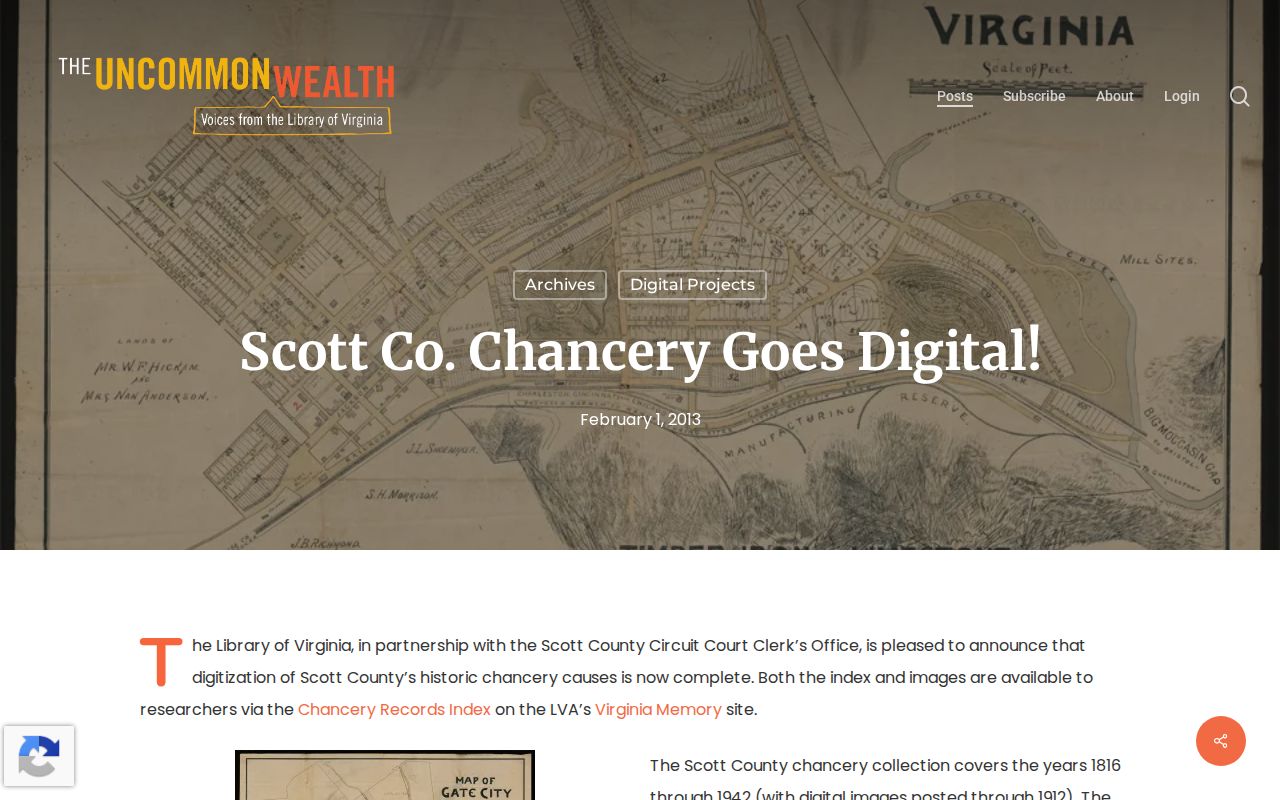
The digitized causes may supply a missing link; the Clerk's land record settles whether a transfer was recorded.
Scott County's Clerk Links a Complimentary Recording Alert
The Circuit Clerk page links a name-based Fraud Notify or Fraud Alert service. Registering a name can trigger an email whenever a document is recorded under it. It is an alert only, not a blocking system or proof that a filing touches a particular parcel. Anyone who receives one should pull the underlying instrument before drawing conclusions about the deed records involved.
The Clerk's land-record office sits at 202 West Jackson Street, Suite 102, in Gate City. The phone number is 276-386-3801, and the counter is open Monday through Friday, 8 a.m. to 4 p.m. The county describes the alert service as complimentary, so a mailed offer charging for the same recording notice deserves skepticism.
Reach the service through the official Scott County Circuit Clerk page.
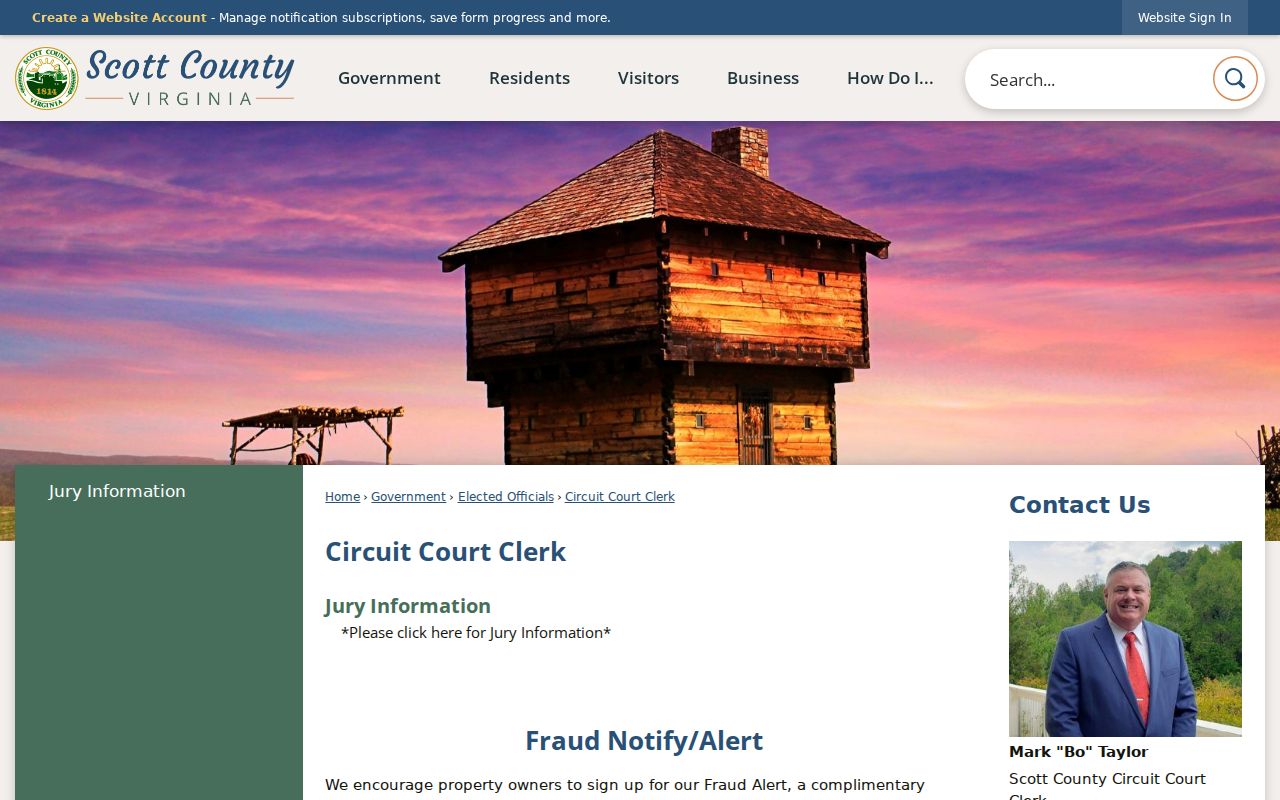
Go to the Clerk's page to sign up, then call the office to verify any unfamiliar recording.
Request a Scott County Deed Copy From the Clerk
Once the index points to a deed, the document reference gives you options. You can buy a copy online, request a certified copy, or visit the Clerk's office. Tyler posts $0.50 per page for online purchases. A $2.00 card convenience fee applies, and the charge is final. Viewing images online requires an SRA subscription. The published price is $50 monthly or $500 annually. Needing just one image changes the math. Ask the Clerk whether a counter copy would serve instead, and which payment methods the office accepts.
Recorded, not guaranteed. The Scott County deed index identifies filings of record; it does not certify that title is clear or reveal every unrecorded claim. For a legal conclusion, rely on a professional title search and the source instruments.
The county lists eRecording companies such as CSC eRecording Solutions and Simplifile. These are submission channels for authorized filers. They are not public search offices and cannot certify who owns a parcel.