
Sources for Former Scott County Property Owners
Scott County's historical trail spans a documented early book range and several repositories. No verified online cutoff year exists. Match the source to the period you need. The Tyler index often leads to the latest transfer. The Library of Virginia finding aid points to microfilm and digitized court material. A local historical collection adds names and context, but the recorded deed remains the instrument that connects an owner to the parcel.
| Source | Years It Covers | Where Held | What It Shows |
|---|---|---|---|
| Tyler land index | Earliest online year not published | Circuit Court Clerk | Recorded land-document references |
| Deed Books 1-3 | 1815-1829 | Library finding aid and county records | Early deed references; confirm access |
| Will Books 1-4 | 1816-1860 | Library of Virginia finding aid | Estate clues, not conveyance proof by themselves |
| Historic chancery causes | Digitization announced 2013; case dates vary | Library of Virginia | Partition, estate, debt, and boundary context |
Start with Tyler for the newest recorded transfer. Scott County formed in 1814, so earlier land events may sit in Washington, Lee, or Russell County records. Check those parent counties before assuming a gap. Move to paper deed books when the index ends. A finding aid gives a coverage lead, not proof that every roll or book is available on a specific shelf.
Scott County's Tyler Index Has No Published Start Year
The Circuit Clerk's Tyler disclaimer names the land index and explains how to get copies. It publishes no earliest online year. No imaging cutover or date filter appears either. Ask the Clerk whether a prior name or book citation is available in the online system. Treat any guessed cutoff as unconfirmed. Start from a known recent grantee.
If the search ends, continue in the historical holdings rather than treating the last online result as the first owner. Field labels on the live form can change. Record the literal names exactly. Document references and old spellings matter, since older deeds use initials, married names, or historic place names. Use the Scott County Tyler portal to begin the modern deed-index portion of a former-owner search.
The Tyler image shows the index entry point. It establishes no earliest year and displays no sample transfer.
Scott County's Early Deed Books Cover 1815 to 1829
The Library of Virginia catalog finding aid lists microfilm of Scott County Deed Books 1 through 3, covering 1815 to 1829. Minute Books 1-5 span 1815 to 1835. Will Books 1-4 run from 1816 to 1860. Those dates show whether a prior-owner question belongs in a deed book, a court minute, or a will record. The catalog is only a guide. It does not prove an item is onsite or open without an appointment.
Scott County's first court sat in 1815. The county itself formed a year earlier from Washington, Lee, and Russell. Use the parent jurisdiction for earlier transfers. The Library of Virginia locality guide offers archival coverage leads.
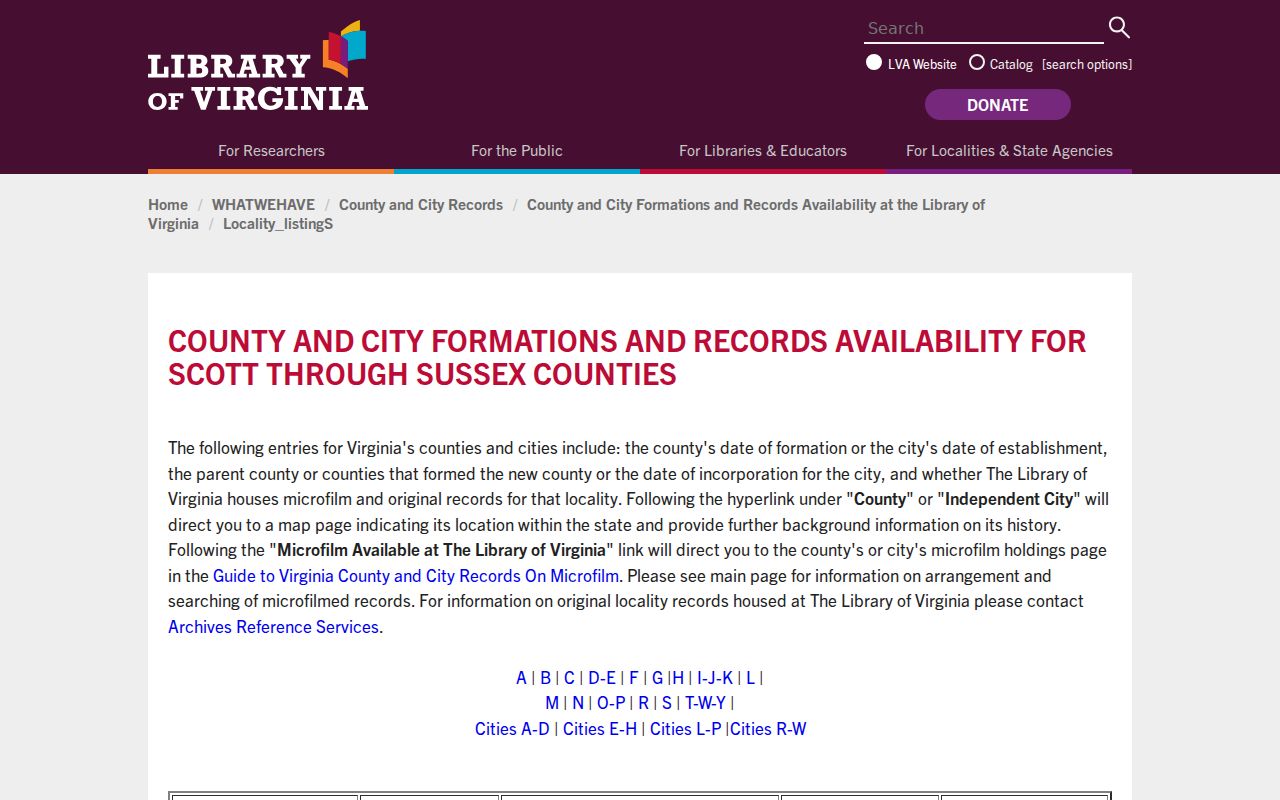
Use the listed deed book dates to frame a records request, and confirm the repository's current access rules and reproduction process before you go.
Walk a Scott County Deed Chain From Grantee to Grantor
Walk the chain backward from the deed that most recently described the Scott County parcel. Each grantee becomes the next search name. The grantor on that earlier instrument points to an older owner. Compare everything at every step. Check the legal description, adjoining calls, lot or plat reference, and acreage, because the land may have been split or recombined over time. A similar name alone never connects two records.
- Locate the instrument that most recently describes the tract and copy its full legal description.
- Record its grantor, grantee, date, and reference before searching another name.
- Search the prior grantor as an earlier grantee and confirm the tract description matches.
- Move from the online index to deed books, microfilm, or archives when the records require an older source.
- Grantor and grantee
- The parties who transferred and received the stated interest.
- Chain of title
- The ordered succession of recorded instruments tied to the same land.
- Legal description
- The deed's land description, which is more stable than an old street label.
This backward method traces ownership only. It skips liens and restrictions, so a full title review also weighs releases, judgments, easements, court orders, and recorded plats.
Historic Scott County Chancery Causes Can Bridge an Heir Transfer
A deed chain can appear to jump when a Scott County property passed through a partition, estate, debt case, or boundary dispute. Chancery pleadings and decrees explain the gap. They can identify the family, tract, or court-ordered sale behind the next instrument. Digitized Scott County chancery causes were announced in 2013. Search a cause for party and parcel clues. Then locate the deed or court order that transferred the land.
Chancery helps most when heirs divided a tract. The later deed often carries a new parcel label. Keep the case date, party names, and description with your chain notes so the next search in Tyler or a deed book stays grounded. The Scott County chancery digitization announcement describes the historical case-file resource.
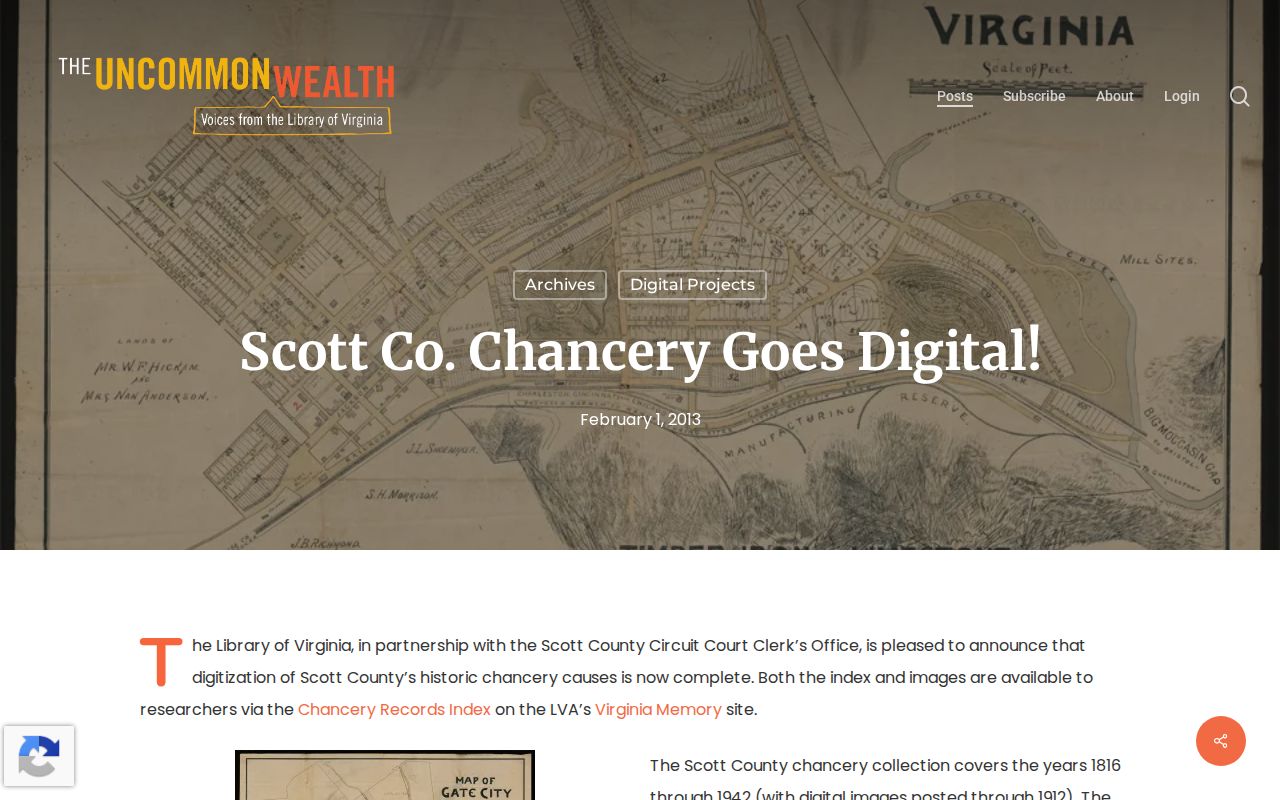
The case explains why; the deed confirms the transfer.
Former Scott County Owners May Appear Under Earlier Place Names
Older place names often beat a modern street address as a clue. Scott County's past includes Winfield, Estillville, Gate City, Carter's Ferry, and Spivy Store. Gate City was once Estillville. The county seat carried different names in its early decades, so a deed, directory, or family paper written before a road rename may point to a location that no longer appears on a current map.
When a property search stalls, keep the old place label next to the modern parcel description. Search both forms in the deed index and in historical material. A matching place name alone never proves two transfers describe the same tract, so confirm with the parcel number and legal description before drawing conclusions.
Scott County Historical Research Can Add Names and Context
The Scott County Historical Society handles research requests for $15 per hour. Most requests are finished within one month. They arrive as a PDF by email. Printed pages cost $0.25 each plus shipping. The society sits at 137 East Jackson Street in Gate City. Public hours run Wednesday and Thursday, 11 a.m. to 2 p.m. Visits by appointment are welcome as well, according to county tourism material.
The Lonesome Pine Regional Library in Gate City holds local-history material. Its finding aid covers deed books, wills, minutes, and vital records. Call ahead to confirm what is onsite. These sources can surface a name or a newspaper notice. But the recorded land instrument held by the Circuit Clerk remains the legal proof of conveyance.
For the full request process and service details, review the Scott County Historical Society research-assistance page.
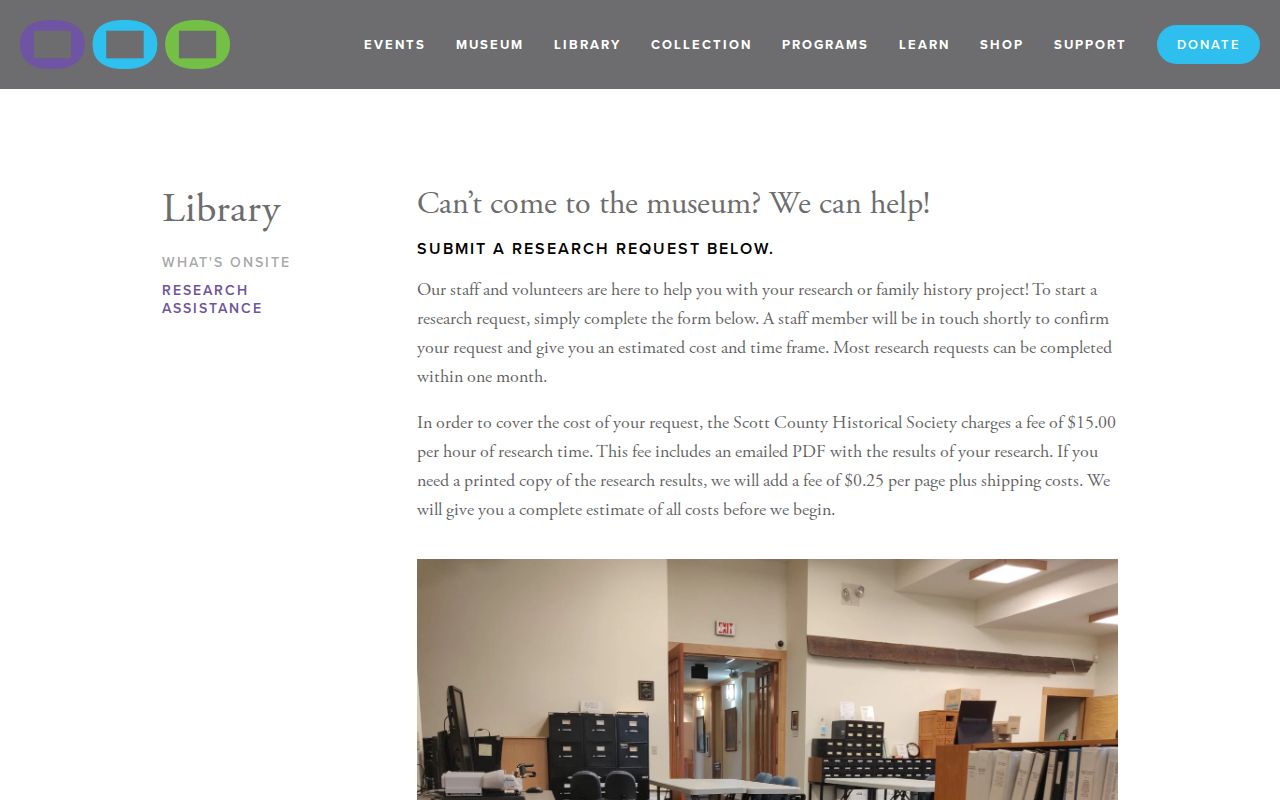
Remote research can build a lead list before you request a deed or a microfilm volume.
How Far Back Former Scott County Ownership Can Be Traced
Scott County's documented deed books begin in 1815. The county itself formed in 1814. Any earlier land event may therefore sit in the records of one of its three parent counties. No official source records a destructive courthouse fire or a lost decade of Scott County property records. Resist explaining a gap with an unproven records-loss story. Check the parent jurisdiction, probate files, court minutes, and chancery papers first.
Lawful use. Research former Scott County owners for house history, title work, or a property question. Do not use a prior owner's name or address to track, threaten, harass, or harm anyone.
For questions predating 1814, continue the ownership chain in Washington, Lee, or Russell County, depending on the land's original jurisdiction. The location and legal description tell you which predecessor records to search.