
What Scott County's Current Owner Record Should Be Checked Against
County indexes point to the Commissioner of the Revenue as the assessment office. They do not display a sample parcel card. The table separates owner details you can verify from card fields. Those fields need direct confirmation from the office. Ask which labels appear in the current land book or InteractiveGIS result. Then compare those details against the newest recorded instrument held by the Clerk.
| Owner name | Confirm exact current land-book label with the Commissioner |
|---|---|
| Vesting language | Read from the recorded deed; the map card was not sampled |
| Mailing address | Notice destination, which may differ from the parcel situs |
| Situs address | Physical location; confirm through map and legal description |
| Deed reference | Find in the Circuit Clerk's land index |
| Recording date | Use the latest instrument; roll lag is not documented |
The owner of record is not always the occupant. Land-book mail in Scott County can go to a different address. An entity, trustee, or estate may hold the recorded interest. The county publishes no guaranteed lag between a deed's recording and the roll showing a new name. For that reason, the latest deed is the strongest evidence of the current recorded owner.
Scott County's Commissioner Maintains the Assessment Side
The Commissioner of the Revenue is Scott County's chief tax-assessing official. The office administers real-estate tax and maintains the assessment basis for county taxation. Its public page lists relief forms and links to InteractiveGIS. It does not expose an exact owner-card label or a parcel-level sample. Ask the Commissioner about the current land-book entry. Do not treat a map's owner text as a certified record.
The Treasurer plays a different role. That office collects taxes and answers payment questions. A tax payment record can verify an account. It is not the instrument that transferred ownership. Keep the assessing, collecting, and recording records distinct.
Use the Commissioner of Revenue page to confirm the county assessment contact.
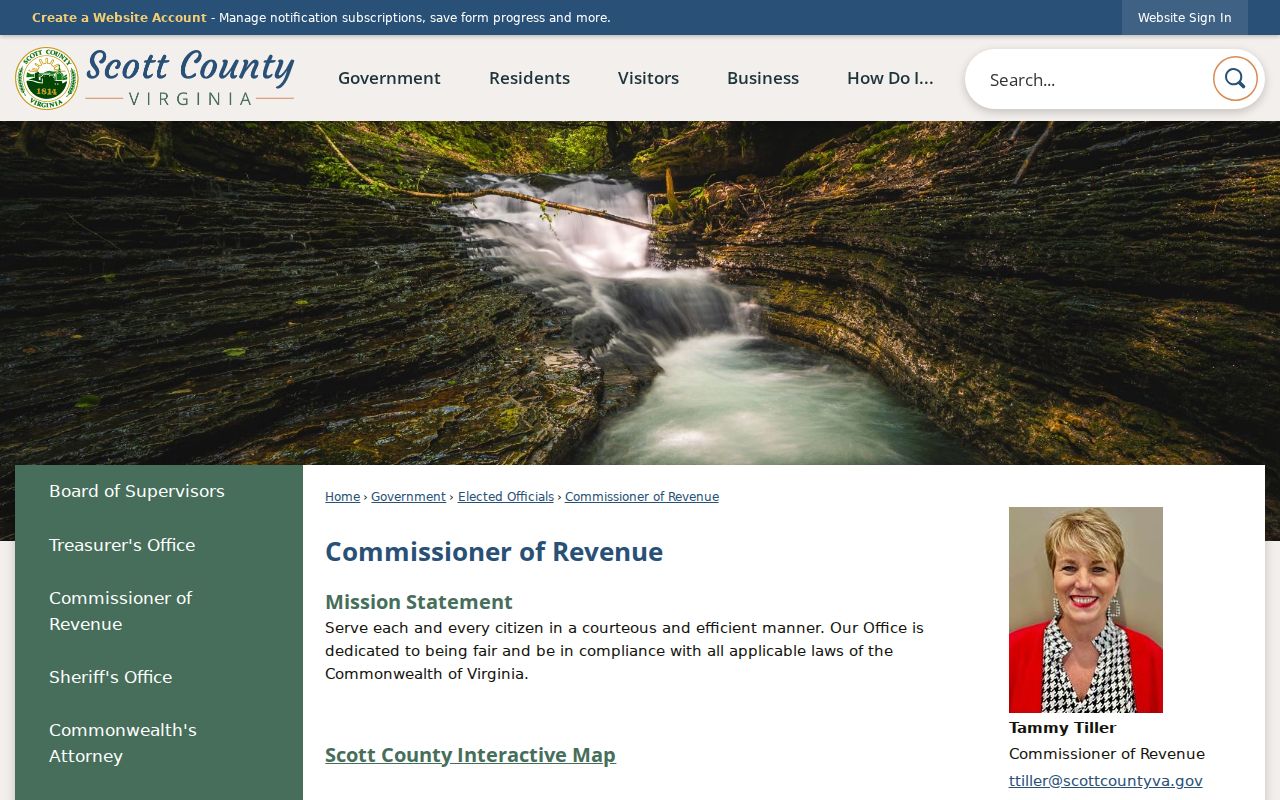
The county commissioner's office runs Scott County assessments.
Scott County Does Not Publish a Guaranteed Owner-Update Lag
Scott County publishes no statement of how often the land book refreshes after a deed records. A recent closing may therefore appear under a prior name in the assessment view. The Circuit Clerk may already hold a newer instrument. Treat this as a known gap rather than guessing a number of days. If timing matters, search the land index for the newest recorded deed and ask the Commissioner when the current roll reflects that transaction.
Assessment and recording are separate processes. The tax roll answers the county's present assessment entry. The deed is the record to read for the most recent conveyance.
Confirm the Scott County Current Owner With the Latest Deed
Start with the assessment entry as a lead. Then confirm the party on the most recent land instrument. The Scott County Tyler index covers land records. It lets users identify a document, purchase a copy, and request a certified copy. Index access and remote image subscription are separate. Read the instrument itself. Compare the grantee, recording date, and legal description with the parcel shown in the map.
- Record the current owner name shown by the Commissioner or InteractiveGIS and note that the label is not publicly documented.
- Search the Clerk's land index for the newest Scott County conveyance tied to that party or parcel.
- Compare the deed's grantee and legal description with the map and assessment entry.
- If a company or fiduciary appears, verify its legal name and capacity from the filed instrument.
- Owner of record
- The party named in the county assessment entry.
- Vesting
- The way an instrument states an interest is held, which must be read in the deed.
- Registered agent
- A company contact that may help identify an entity, not necessarily the person who owns land.
For a single current-owner question, stay with the latest conveyance. Tracing older transfers is a separate deed-chain task.
Write down the source and date for each name you compare. The Commissioner's assessment entry supports a present land-book question. The Clerk's newest recorded deed shows the instrument parties and the land description as filed. A Tyler result may locate a document. It may not show the image. Remote access must be authorized, or a copy ordered. The county publishes no delay figure. That covers the gap between recording and an assessment update. So neither a closing date nor a map label predicts when the roll will display the new name.
If two records conflict, go to the official offices rather than averaging the names. Ask the Commissioner whether the assessment entry has been updated. Ask the Clerk for the newest conveyance or a certified copy. The Treasurer can confirm payment status but does not determine title. Keeping these roles separate makes the answer clearer. The question may be who the land book lists. It may be who the deed names. It may be whether taxes were paid. Each requires a different record.
A Scott County Owner May Be a Company or Estate
A recorded grantee can be an LLC, corporation, trustee, executor, administrator, or another fiduciary. It may not be a person at all. The deed should identify the named capacity. For a company, Virginia's State Corporation Commission keeps business records. These help distinguish an entity name and status. For an estate, look at the will or probate record. Compare it with the executor's or administrator's recorded conveyance.
A company agent or probate contact is not automatically the landowner. Keep the grantee name from the deed as the recorded owner. Use related sources only to understand the capacity stated there.
Scott County's Newest Recorded Instrument Takes Priority for Timing
Suppose the assessor card shows one owner and a recent closing suggests another. Timing is usually the answer. The newest recorded instrument controls. Check the Circuit Clerk's Tyler land index for the most recent filing. The index covers land records along with judgment, UCC, will, and marriage families. No cutover year or sample result is published online, so run the search live. Identify the document first. Then obtain the image or a counter copy. Draw no conclusion about who now holds title until then.
Copy pricing is published in the Tyler disclaimer. Online copies cost $0.50 per page plus a $2 card convenience fee. Remote image access requires a separate subscription. Confirm the terms at checkout. Ask the Clerk about certified copies when the situation calls for one. Open the Tyler self-service index to find the Scott County conveyance reference.
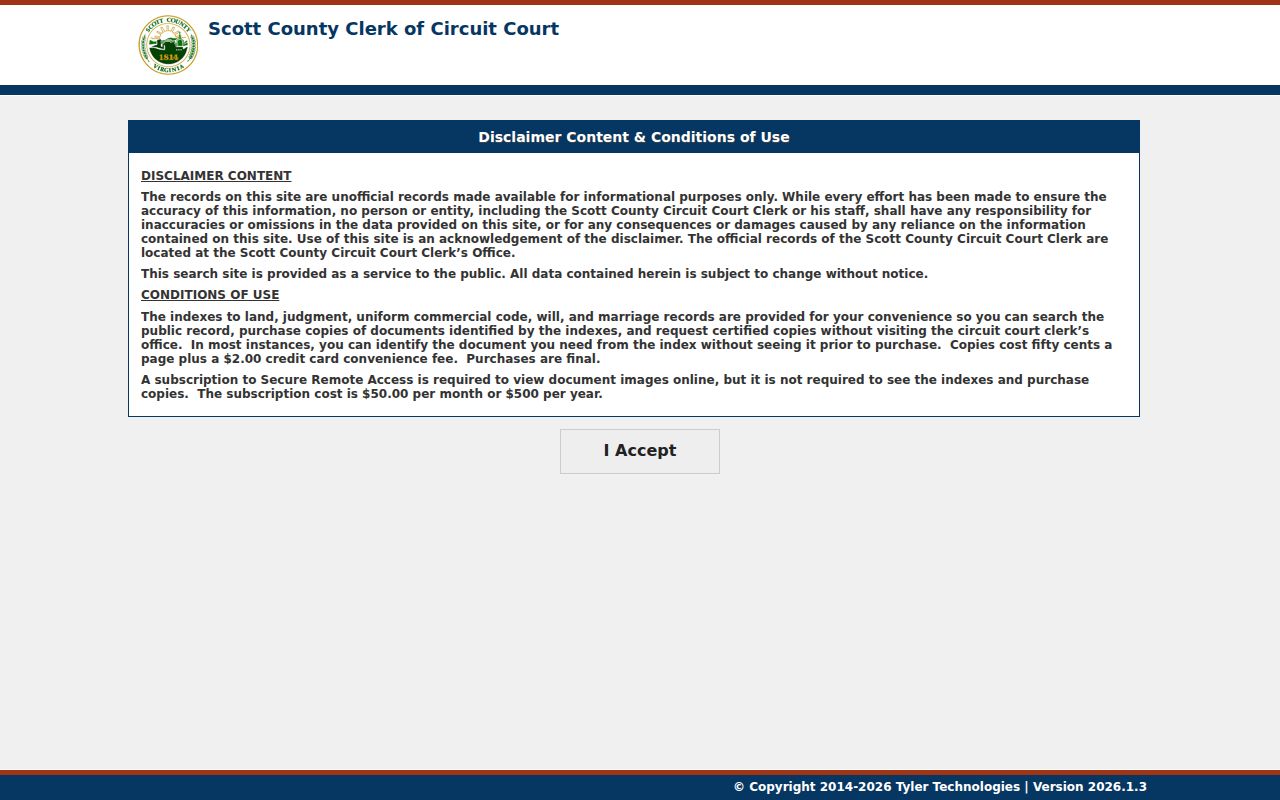
The index only points to a filed document. The recorded deed is what you actually read to confirm the transfer. Scott County's Tyler disclaimer draws this line clearly. Identifying a document is one thing. Viewing or buying its image is another. Online copy orders carry a published per-page cost plus a card convenience charge. Remote images sit behind a separate SRA subscription. Need a certified instrument or cannot reach the image? Call the Clerk before traveling and ask which copy option fits your question. For a single owner check, the most recent conveyance reference and its description are usually enough. Ordering every earlier deed adds work without answering a current assessment or payment question.
Scott County's Recording Alert Tracks a Registered Name
The Circuit Clerk offers a free email alert for documents recorded under a registered name. It is name-based, not parcel-based. Owners can use it to spot a new filing. They can then contact the Clerk to inspect the actual instrument. The alert does not stop a recording. Treat it as a prompt for follow-up rather than proof that a property changed hands. The Circuit Court Clerk's official page links to current recording-alert information.
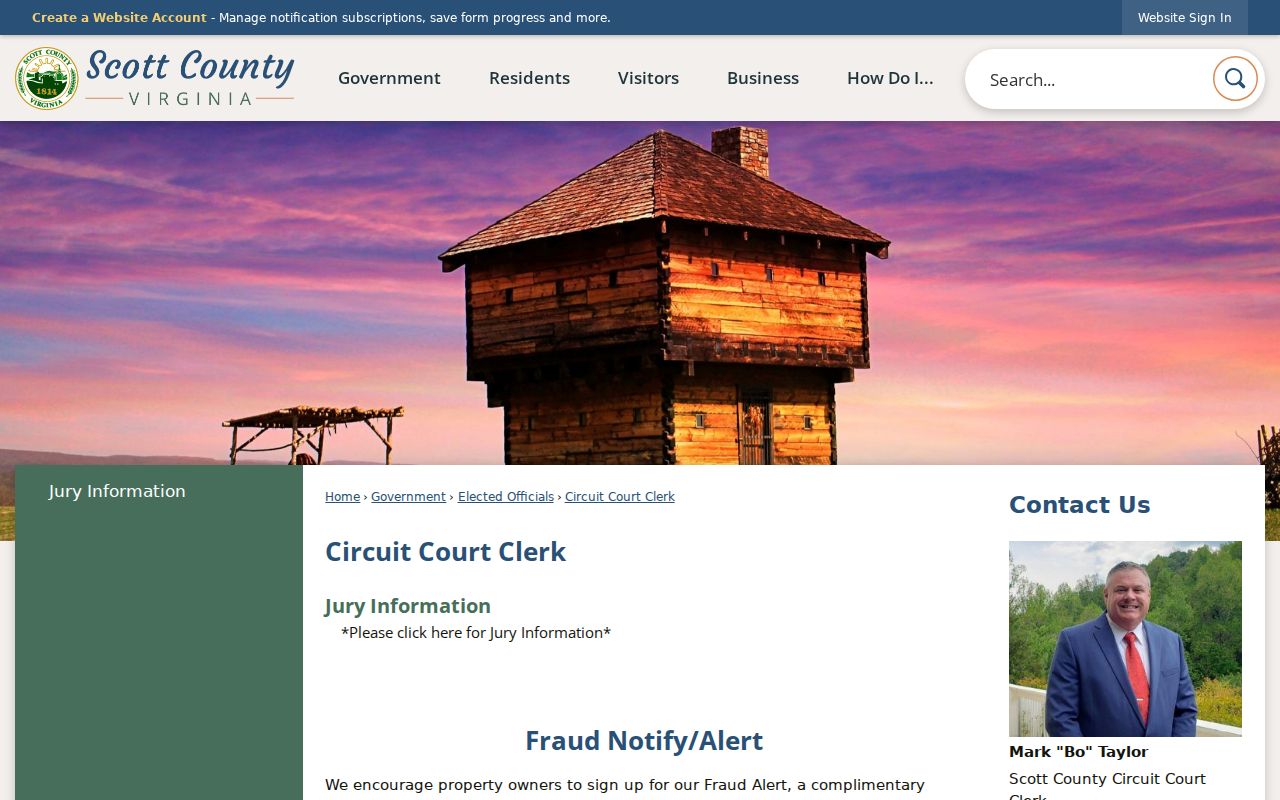
Note: If a notice surprises you, verify the instrument and parcel with the official office before taking any action.
Use the Scott County Mailing Address for Property Correspondence
A mailing address on the tax record is simply where county notices go. It may not match the property's physical address at all. No sample parcel card is published online. So confirm which address fields appear before relying on them. Keep any property inquiry focused on a deed, boundary, assessment, or tax question. Respect protected and confidential information limits.
Lawful use. Use a Scott County owner record for a legitimate property matter. Do not use a mailing address or owner name to stalk, threaten, harass, or harm a person.